Branding
Logo vs Branding – What’s the Difference and Why Your Business Needs Both?
Discover the key differences between logo design and branding. Learn why a logo is only one part of building a strong brand and how strategic branding helps businesses create trust, recognition, and long-term value.
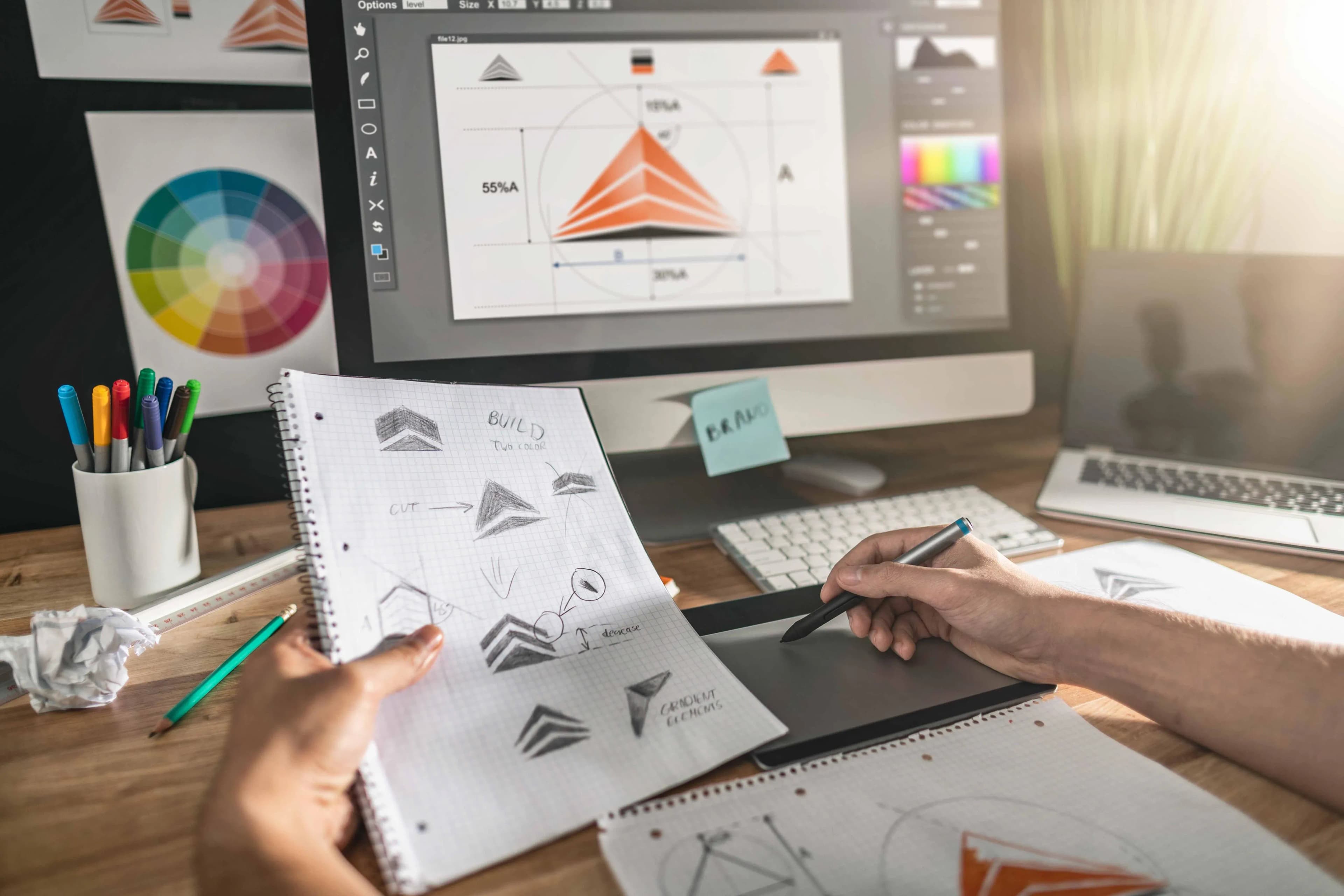
Logo vs branding – what is the difference and why does your company need both?
Many companies that begin building their brand start with one question: “We need a new logo.” It is a natural first step because a logo is one of the most visible elements of any brand.
However, a logo alone does not create a strong brand.
Professional company branding is a much broader process that includes strategy, communication, visual identity, the way a company presents itself, and every experience a customer has with the brand.
A logo is a symbol of a brand. Branding is the system that gives this symbol meaning.
In this article, we will explain exactly how a logo differs from branding, what elements create a strong brand, and why simply designing an attractive graphic mark is often not enough to make a company stand out in the market.
What is a logo?
A logo is a graphic symbol representing a company, product, or organization. It is one of the fundamental elements of visual identity and is often the first point of contact between an audience and a brand.
It can consist of different elements:
wordmark – the company name presented in a distinctive typographic form,
symbol or icon – a graphic mark associated with the brand,
color palette,
distinctive typography.
A good logo should be:
easy to remember,
recognizable,
consistent with the company's character,
functional across different applications.
A logo must work equally well on a website, business card, product packaging, mobile application, and social media.
However, it is not only about aesthetics.
A professionally designed logo should communicate specific values and create the first associations with the brand.
For example:
geometric and minimalist forms are often associated with technology, precision, and innovation,
soft, rounded shapes can communicate accessibility and friendliness,
strong typography can create associations with strength, stability, and professionalism.
A logo is therefore a communication tool, but it remains only one element of a larger system.
What is branding?
Branding is the process of building a brand.
Unlike a logo, which is a specific visual element, branding includes all actions and decisions that influence how a company is perceived by customers.
A brand exists in the mind of the audience.
It is the sum of all associations, emotions, experiences, and opinions connected with a company.
That is why branding includes:
brand strategy,
company positioning,
values and mission,
brand communication,
tone of voice,
visual identity,
customer experience,
the way products and services are presented.
You could say that a logo answers the question:
“What does my brand look like?”
While branding answers a much broader question:
“Who is my brand and why should someone trust it?”
A logo is part of branding, but branding is not a logo
One of the most common mistakes in business is treating a logo and branding as the same thing.
A company invests in a new logo, expecting that the graphic design itself will automatically improve its market position.
The problem is that a logo without the right context remains only a symbol.
Imagine a person you see for the first time.
You may remember their face, but the face itself does not tell you everything.
You do not yet know:
what their values are,
how they communicate,
what experiences they have,
what makes them different,
why you should trust them.
A logo works in a similar way.
It is the “face” of a brand, but it is not the entire personality.
A strong brand needs a consistent system that ensures every customer interaction with the company strengthens specific associations.
The most important differences between a logo and branding
Logo | Branding |
|---|---|
It is a single visual element | It is the entire process of building a brand |
Helps people recognize a company | Builds emotions and relationships with customers |
Focuses on appearance | Combines strategy, communication, and design |
Is designed by a graphic designer or studio | Requires business, market, and audience analysis |
Is part of visual identity | Covers the entire brand identity |
A logo helps customers recognize a company.
Branding helps customers understand who the company is and why they should choose it.
Why do companies often confuse logos with branding?
The reason is simple – a logo is the most visible element of a brand.
It can be seen:
on a website,
in advertisements,
on company vehicles,
on social media,
on products.
That is why many people associate a brand primarily with its graphic symbol.
However, modern brands compete not only through appearance.
Customers pay attention to the entire experience:
whether the company communicates professionally,
whether its website builds trust,
whether the offer is clear,
whether brand values are consistent,
whether customer service matches the brand promise.
Even the best logo cannot save a company that lacks a clearly defined direction.
Does every company need branding?
Yes, because every company already has a brand.
Even if a business has never created a brand strategy, customers still form their own opinions and associations.
The question is not:
“Do we need branding?”
The question is:
“Do we want to consciously control how we are perceived?”
Companies that intentionally build their brand have greater control over communication, stand out more easily from competitors, and can build customer trust faster.
Logo and branding should work together
The greatest value is achieved when a logo is the result of a well-thought-out brand strategy.
Logo design should not begin with opening a graphic design program, but with understanding the company:
who is the target audience?
what problems does the brand solve?
what emotions does it want to create?
how is it different from competitors?
what personality best describes the company?
Only then can a mark be created that not only looks good but also carries the right meaning.
A logo should be a visual shortcut of the entire brand story.
What does professional company branding consist of?
Effective branding is not a single graphic design project. It is a complete system of elements that together create a consistent image of a brand.
Professional branding answers three fundamental questions:
Who are we as a company?
Who are we creating our products or services for?
Why should customers choose us over competitors?
Only after answering these questions can a brand identity be created that is not only visually attractive but also effective from a business perspective.
Brand strategy – the foundation of every branding project
The biggest mistake when building a brand is starting with appearance alone.
Many companies begin by choosing colors, creating a logo, or designing a website before defining their market position.
The problem appears when the visual layer of the brand does not have the right foundation.
Brand strategy helps define:
company values,
mission,
target audience,
competitive advantage,
communication style,
brand personality.
Without a strategy, visual identity design often becomes nothing more than creating an aesthetically pleasing image that does not necessarily support business goals.
Brand positioning – why should customers choose you?
The market is becoming increasingly competitive.
In many industries, companies offer similar products and services, meaning quality alone is often not enough to stand out.
A brand needs clear positioning.
Positioning answers the question:
"How do we want our customers to remember us?"
For example, two companies can offer similar services while communicating completely different values.
One company may position itself as:
premium and exclusive,
focused on quality,
designed for demanding customers.
Another may build its communication around:
accessibility,
simplicity,
speed of execution.
Both companies can succeed if their branding consistently supports their chosen strategy.
Visual identity – how does a brand look?
Visual identity is the part of branding responsible for the appearance of a brand.
It includes:
logo,
color palette,
typography,
icon system,
photography,
illustrations,
marketing material layouts,
website design,
company materials.
Its purpose is to create a consistent visual language that allows audiences to quickly recognize the brand.
A well-designed identity ensures that regardless of where customers interact with the company, they receive a similar message.
This can include:
website,
advertisements,
sales presentations,
social media profiles,
product packaging.
Every element should work toward the same goal.
Brand voice – a brand also has its own voice
Branding does not end with visual elements.
Strong brands also have a defined way of communicating.
Brand voice determines:
how a company speaks to customers,
what language it uses,
what emotions it wants to create,
what personality its communication has.
Different brands communicate differently:
a law firm building authority,
a sports brand motivating customers,
a technology startup showcasing innovation.
The visual side of a brand may attract attention, but communication determines whether audiences feel a connection with it.
Customer experience is part of the brand
Modern branding is not limited to what a company shows.
It also includes what customers experience.
A brand is created through every touchpoint:
the first visit to a website,
the purchasing process,
customer service interactions,
product delivery,
post-purchase communication.
A company may have an excellent logo and professional visual identity, but if the customer experience does not match the brand promise, trust quickly decreases.
That is why the strongest brands design not only their appearance but the entire ecosystem of experiences.
Why is a logo alone often not enough?
A logo can make a company look more professional.
However, it does not automatically make customers:
understand the offer,
remember company values,
choose the brand over competitors,
build an emotional connection with it.
Imagine two companies operating in the same industry.
The first has a modern logo, but its website is chaotic, communication is inconsistent, and its offer is unclear.
The second has a simpler logo, but every element of its online presence communicates the same values: professionalism, quality, and trust.
In practice, the second brand will often be perceived as stronger.
The reason?
The logo design alone did not win.
The consistency of the entire experience did.
Branding vs visual identity – what is the difference?
These two terms are often used interchangeably, but they describe different things.
Branding is a broader process.
It includes:
strategy,
values,
communication,
customer experience,
visual identity.
Visual identity, on the other hand, focuses on the appearance of the brand.
It can be presented simply:
Element | Responsible for |
|---|---|
Branding | Who the brand is and how it is perceived |
Brand strategy | The direction and market position of the company |
Visual identity | How the brand looks |
Logo | The most recognizable symbol of the brand |
A logo is therefore part of visual identity, and visual identity is one element of the entire branding process.
The branding process – why does it require analysis?
Professional branding does not begin with design.
The first stage is understanding the company.
Designers need to understand:
brand history,
business goals,
customers,
competitors,
market,
problems the company solves.
That is why the branding process often begins with:
strategic workshops,
conversations with company founders,
competitor analysis,
target audience research,
creating a creative direction.
Only then should the visual design stage begin.
Research and competitor analysis before creating a logo
A good design is not created separately from the market.
Competitor analysis helps answer important questions:
How do brands in this industry look?
Which visual patterns are commonly used?
Where is there space for differentiation?
What associations do we want to build?
The goal is not to copy competitors.
The goal is to find your own position in the market.
The strongest brands often do not try to look like everyone else.
They create their own character that allows audiences to recognize them quickly.
Moodboard and creative direction of the brand
Before creating the final design, a moodboard is often prepared.
It is a collection of visual references that helps define the aesthetic direction of the brand.
It may include:
photography examples,
colors,
typography,
graphic styles,
communication examples.
A moodboard is not a finished design.
Its purpose is to establish a shared visual language between the company and the design team.
This helps avoid situations where the client and designer have completely different expectations about the final result.
From strategy to visual design
Only after defining the brand foundations does the design stage begin.
At this point, the logo stops being a random symbol.
It becomes the result of specific decisions:
defined audience,
brand values,
positioning,
company personality.
The best logos do not try to communicate everything.
Their purpose is to create a strong visual reference point that supports the entire brand.